Choosing the Right Steam Sterilizer for Your Healthcare Practice
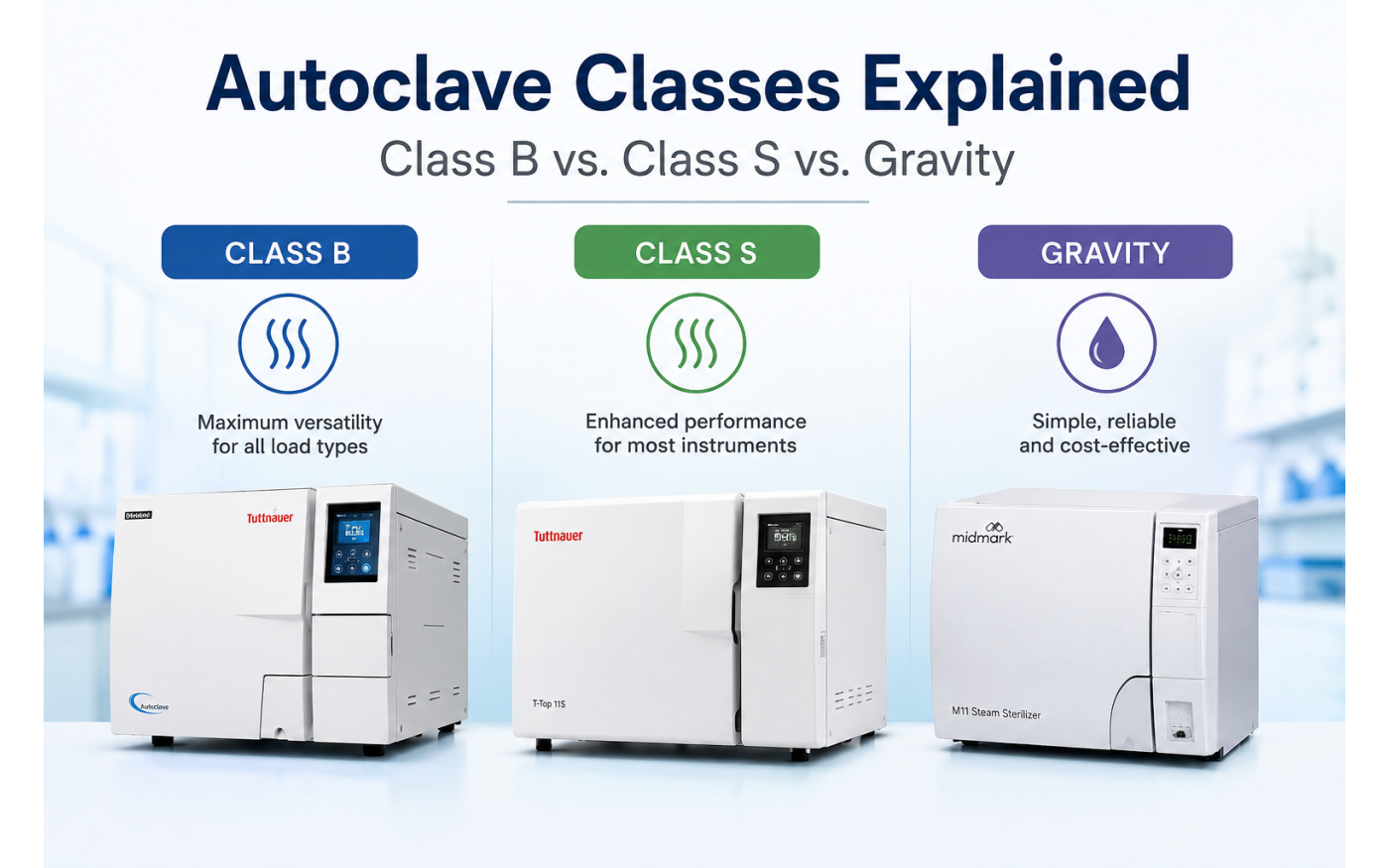
When purchasing a new autoclave, one of the first decisions you'll encounter is choosing between Class B, Class S, and gravity displacement sterilizers. While each type uses steam to sterilize medical instruments, they differ significantly in how they remove air from the chamber, the types of loads they can process, cycle times, and overall versatility.
Understanding these differences can help ensure your practice selects the right sterilizer for its workflow, instrument types, and regulatory requirements.
What Is an Autoclave?
An autoclave, also known as a steam sterilizer, uses pressurized steam to eliminate bacteria, viruses, fungi, and bacterial spores from reusable medical instruments. Proper sterilization is essential in healthcare settings to reduce the risk of cross-contamination and help maintain a safe environment for both patients and staff.
Autoclaves are commonly used in:
- Medical offices
- Dental practices
- Veterinary clinics
- Surgical centers
- Podiatry offices
- Dermatology clinics
- Outpatient healthcare facilities
Understanding Autoclave Classes
The primary difference between autoclave classes is how they remove air from the sterilization chamber before steam is introduced. Air removal is critical because trapped air prevents steam from contacting every surface of an instrument, reducing sterilization effectiveness.
Class B Autoclaves
Class B sterilizers use a vacuum pump to remove air from both the chamber and hollow instruments before the sterilization cycle begins. Multiple pre-vacuum and post-vacuum stages ensure steam reaches every surface.
Best For
- Surgical instruments
- Hollow instruments
- Wrapped instruments
- Porous loads
- Dental handpieces
- Complex instrument sets
Advantages
- Highest level of versatility
- Excellent steam penetration
- Suitable for virtually all load types
- Ideal for practices with varied instruments
- Examples are the Tuttnauer T-TOP10B and the Tuttnauer T-TOP11B
Considerations
Because of the integrated vacuum system, Class B autoclaves generally have a higher purchase price and require more maintenance than simpler gravity units.
Class S Autoclaves
Class S sterilizers bridge the gap between gravity and Class B systems. They are designed to sterilize specific load types identified by the manufacturer and often use specialized air removal methods that are more advanced than gravity displacement but not as comprehensive as a full pre-vacuum Class B system.
Best For
- Many wrapped instruments
- Solid instruments
- Selected hollow instruments (manufacturer dependent)
- General medical practices
- Specialty clinics
- Examples are the Tuttnauer T-TOP10S and the Tuttnauer T-TOP11S
Advantages
- Greater versatility than gravity sterilizers
- Lower cost than many Class B models
- Faster cycles on many loads
- Excellent option for many outpatient practices
Considerations
Capabilities vary by manufacturer, so it's important to verify exactly which instruments and load types a specific Class S autoclave is validated to process.
Gravity Displacement Autoclaves
Gravity sterilizers represent the traditional tabletop autoclave found in many physician offices.
Instead of using a vacuum pump, steam enters the chamber and naturally pushes heavier air downward through a drain.
Best For
- Solid instruments
- Unwrapped instruments
- Simple medical tools
- Smaller physician practices
Advantages
- Lower purchase cost
- Simple operation
- Reliable performance
- Lower maintenance requirements
Considerations
Gravity sterilizers are generally not intended for many complex, hollow, or porous loads, making them less versatile than vacuum-assisted systems.
Comparison at a Glance
| Feature | Gravity | Class S | Class B |
|---|---|---|---|
| Air Removal | Gravity displacement | Assisted air removal | Full vacuum |
| Hollow Instruments | Limited | Some models | Excellent |
| Wrapped Loads | Basic | Very Good | Excellent |
| Porous Loads | Limited | Some models | Excellent |
| Cost | Lowest | Moderate | Highest |
| Versatility | Good | Very Good | Excellent |
| Maintenance | Low | Moderate | Moderate to High |
Which Autoclave Is Right for Your Practice?
The best sterilizer depends on the instruments you process every day.
Family Practice
A high-quality gravity sterilizer or Class S unit is often sufficient for routine medical instruments.
Dental Offices
Many dental practices benefit from Class B sterilizers because of the number of hollow instruments and handpieces requiring reliable steam penetration.
Surgical Centers
Facilities processing wrapped surgical trays, lumened devices, and complex instrument sets typically require the capabilities of a Class B autoclave.
Specialty Clinics
Dermatology, podiatry, ENT, and other specialty practices should evaluate the specific instrument types they sterilize before selecting a model.
Popular Autoclave Manufacturers
Healthcare providers often choose trusted manufacturers with long histories of reliable sterilization equipment.
Tuttnauer Autoclaves
Tuttnauer offers gravity, Class S, and Class B sterilizers designed for physician offices, dental practices, veterinary clinics, and outpatient healthcare facilities. Their tabletop autoclaves are recognized for durability, ease of use, and dependable performance.
Midmark Autoclaves
Midmark is well known for its gravity displacement steam sterilizers, including models commonly found in physician offices, family medicine practices, urgent care centers, and specialty clinics. Midmark sterilizers are valued for their reliability, straightforward operation, and integration into everyday clinical workflows.
Check out our other articles to learn more about Autoclaves:
Tuttnauer Autoclave Comparison Guide: Which Model Is Right for Your Practice?
Understanding Autoclave Testing: Why It Matters and How It's Performed
How to Clean and Maintain a Tuttnauer Autoclave: Complete Guide
Where Can I Buy an Autoclave Online for a Medical Office?
Frequently Asked Questions
What is the difference between Class B and Class S autoclaves?
Class B autoclaves use a full vacuum system capable of sterilizing nearly all load types, including wrapped, porous, and hollow instruments. Class S sterilizers offer enhanced performance over gravity units but are validated only for specific load types identified by the manufacturer.
Is a gravity autoclave still a good choice?
Yes. Gravity displacement sterilizers remain an excellent option for many medical practices that primarily sterilize solid, unwrapped instruments and do not require processing of complex hollow devices.
Which autoclave is best for dental offices?
Many dental practices choose Class B sterilizers because they are well suited for dental handpieces, wrapped instruments, and hollow devices requiring thorough steam penetration.
Are Class B autoclaves worth the additional cost?
Practices processing a wide variety of instruments often find the additional versatility, validation, and flexibility of Class B sterilizers well worth the investment.
Can I sterilize wrapped instruments in a gravity autoclave?
Some gravity sterilizers can process certain wrapped loads according to the manufacturer's instructions, but they generally have more limitations than Class S or Class B systems. Always follow the sterilizer manufacturer's validated instructions for use.
Conclusion
Choosing between a gravity, Class S, or Class B autoclave comes down to the types of instruments you process, your daily patient volume, and your long-term practice needs. While gravity sterilizers remain an excellent solution for many physician offices, Class S and Class B systems provide greater flexibility for practices handling wrapped, hollow, or more complex instrument loads.
If you're unsure which sterilizer best fits your workflow, working with an experienced medical equipment supplier can help ensure you select an autoclave that supports both your current needs and future growth.
If you're comparing sterilizers for your practice, browse our complete selection of Autoclaves & Sterilizers to compare gravity, Class S, and Class B models.
Shop for Related Medical Equipment
And our complete line of Medical Equipment
Related Medical Equipment Articles
- Why ADA Compliant Medical Scales Matter: A Guide for Healthcare Facilities
-
Understanding Autoclave Testing: Why It Matters and How It's Performed
-
Midmark 204 vs Clinton 8890 | Best Exam Table Comparison for Medical Practices
-
Medical Exam Tables: How to Choose the Right Table for Your Practice
-
How to Choose the Right Clinton Treatment Table for Your Medical Practice
-
Outfitting a New Medical Exam Room: The Complete Equipment Checklist
-
Tuttnauer Autoclave Comparison Guide: Which Model Is Right for Your Practice?
- How to Clean and Maintain a Tuttnauer Autoclave: Complete Guide