Why Autoclave Testing Matters
Steam sterilization plays a critical role in infection prevention across medical, dental, veterinary, and outpatient healthcare facilities. However, simply running an autoclave cycle isn't enough—healthcare providers also need to verify that the sterilization process is working correctly.
Autoclave testing helps confirm that a sterilizer is operating as intended and that reusable instruments are being processed effectively. This article explains the different types of autoclave testing, how they work, and why they're important for patient safety. If you're evaluating new sterilization equipment, browse our selection of Autoclaves & Sterilizers to compare models for medical, dental, and healthcare practices.
Important: Sterilization monitoring requirements can vary by state, accrediting organization, healthcare specialty, and manufacturer. This article is intended for educational purposes only. Always follow your state regulations, accreditation requirements, the autoclave manufacturer's instructions for use (IFU), and your facility's infection control policies.
What Is Autoclave Testing?
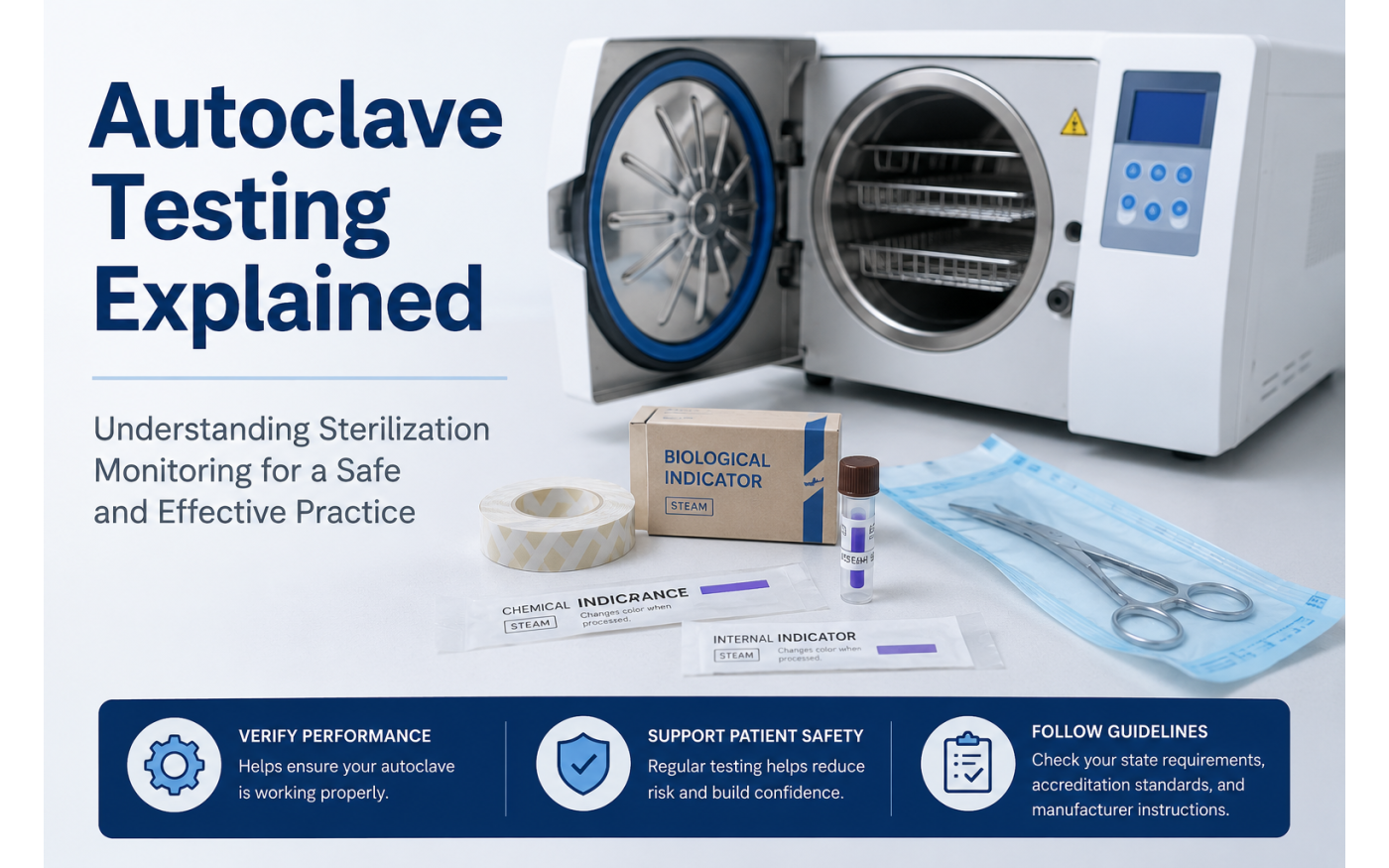
Autoclave testing refers to the methods used to verify that a steam sterilizer is operating correctly. Rather than relying on a single check, sterilization monitoring uses multiple types of indicators to evaluate different aspects of the process.
Healthcare facilities commonly use three types of monitoring:
- Mechanical monitoring
- Chemical indicators
- Biological indicators (spore testing)
Together, these methods help provide confidence that the sterilization cycle has been completed properly. Understanding how your sterilizer operates begins with selecting the right type of autoclave. Our guide to Autoclave Classes: Class B vs. Class S vs. Gravity Sterilizers explains the differences between the most common sterilization systems.
Mechanical Monitoring
Mechanical monitoring involves reviewing the sterilizer's cycle information, such as:
- Temperature
- Pressure
- Exposure time
- Cycle printout or digital record
Most modern tabletop autoclaves automatically record this information for each cycle. Staff should verify that the cycle completed according to the manufacturer's specifications before releasing instruments for use. Modern systems like Tuttnauer Autoclaves and Midmark Autoclaves include digital monitoring features that simplify cycle documentation.
Chemical Indicators
Chemical indicators are designed to show that instruments have been exposed to the sterilization process.
Examples include:
- Autoclave indicator tape
- Internal chemical indicator strips
- Chemical integrators
These indicators change color when exposed to specific sterilization conditions. While they help confirm that steam reached the package, they do not prove sterility on their own.
Biological Indicators (Spore Tests)
Biological indicators are widely considered the most direct method of verifying that a steam sterilization cycle was effective because they challenge the sterilization process using highly resistant bacterial spores.
Steam sterilization biological indicators typically contain Geobacillus stearothermophilus spores. After the cycle, the indicator is incubated to determine whether any spores survived.
A negative result indicates that the sterilization process successfully inactivated the test spores, while a positive result indicates that additional investigation is needed.
How a Typical Biological Indicator Test Is Performed
Although procedures vary by manufacturer, a typical process includes:
- Place the biological indicator in the location recommended by the sterilizer or test-pack manufacturer.
- Run a normal sterilization cycle.
- Activate or prepare the biological indicator according to the manufacturer's instructions.
- Incubate the processed indicator along with the required unprocessed control indicator.
- Record the results as part of your sterilization documentation.
Always follow the instructions supplied with your biological indicator system and your sterilizer manufacturer.
What Happens If a Biological Test Fails?
A positive biological indicator does not automatically mean every instrument processed by the sterilizer is unsafe. It does indicate that the sterilization process should be evaluated before the sterilizer continues to be used.
The appropriate response depends on the manufacturer's instructions, your facility's policies, and applicable regulatory or accreditation requirements. Facilities often review cycle records, verify procedures, repeat testing as appropriate, and inspect or service the sterilizer if necessary.
Check out our other articles to learn more about Autoclaves:
Where Can I Buy an Autoclave Online for a Medical Office?
Autoclave Classes Explained: Class B vs. Class S vs. Gravity Sterilizers
How to Clean and Maintain a Tuttnauer Autoclave: Complete Guide
Where Can I Buy an Autoclave Online for a Medical Office?
How Often Should an Autoclave Be Tested?
There is no single answer that applies to every healthcare facility.
Testing frequency may depend on factors such as:
- State regulations
- Healthcare specialty
- Accrediting organizations
- Manufacturer instructions
- Facility infection control policies
- The type of instruments being processed
Many healthcare organizations reference guidance from the CDC and professional standards organizations, but individual requirements can differ. Always verify the requirements that apply to your practice before establishing your sterilization monitoring schedule.
Choosing the Right Autoclave
Reliable sterilization begins with choosing the right equipment for your practice.
When comparing tabletop sterilizers, consider:
- Chamber capacity
- Gravity, Class S, or Class B design
- Cycle times
- Ease of maintenance
- Recordkeeping features
- Manufacturer support
- Tuttnauer Autoclaves
- Midmark Autoclaves
A quality autoclave, combined with proper monitoring procedures, helps support an effective infection prevention program.
Frequently Asked Questions
What is an autoclave biological indicator?
A biological indicator is a test device containing highly resistant bacterial spores used to verify that a steam sterilization cycle effectively inactivated microorganisms.
Are chemical indicators the same as biological indicators?
No. Chemical indicators verify that sterilization conditions were reached, while biological indicators directly evaluate whether the sterilization process successfully inactivated resistant spores.
Does every healthcare facility have the same autoclave testing requirements?
No. Requirements can vary depending on state regulations, specialty, accrediting organizations, and manufacturer instructions.
What should I do if a spore test is positive?
Follow your sterilizer manufacturer's instructions, your facility's policies, and applicable regulatory requirements. A positive test should always be investigated before continuing routine sterilization.
Why is biological monitoring important?
Biological monitoring provides direct evidence that a sterilization process was capable of inactivating highly resistant bacterial spores, making it an important part of a comprehensive sterilization quality assurance program.
Conclusion
Autoclave testing is an essential part of maintaining a safe and effective sterilization process. By understanding the roles of mechanical monitoring, chemical indicators, and biological indicators, healthcare facilities can better verify that their steam sterilizers are functioning properly.
Because sterilization monitoring requirements vary, always consult your state regulations, accrediting organizations, and equipment manufacturers when developing or reviewing your facility's infection prevention procedures.