
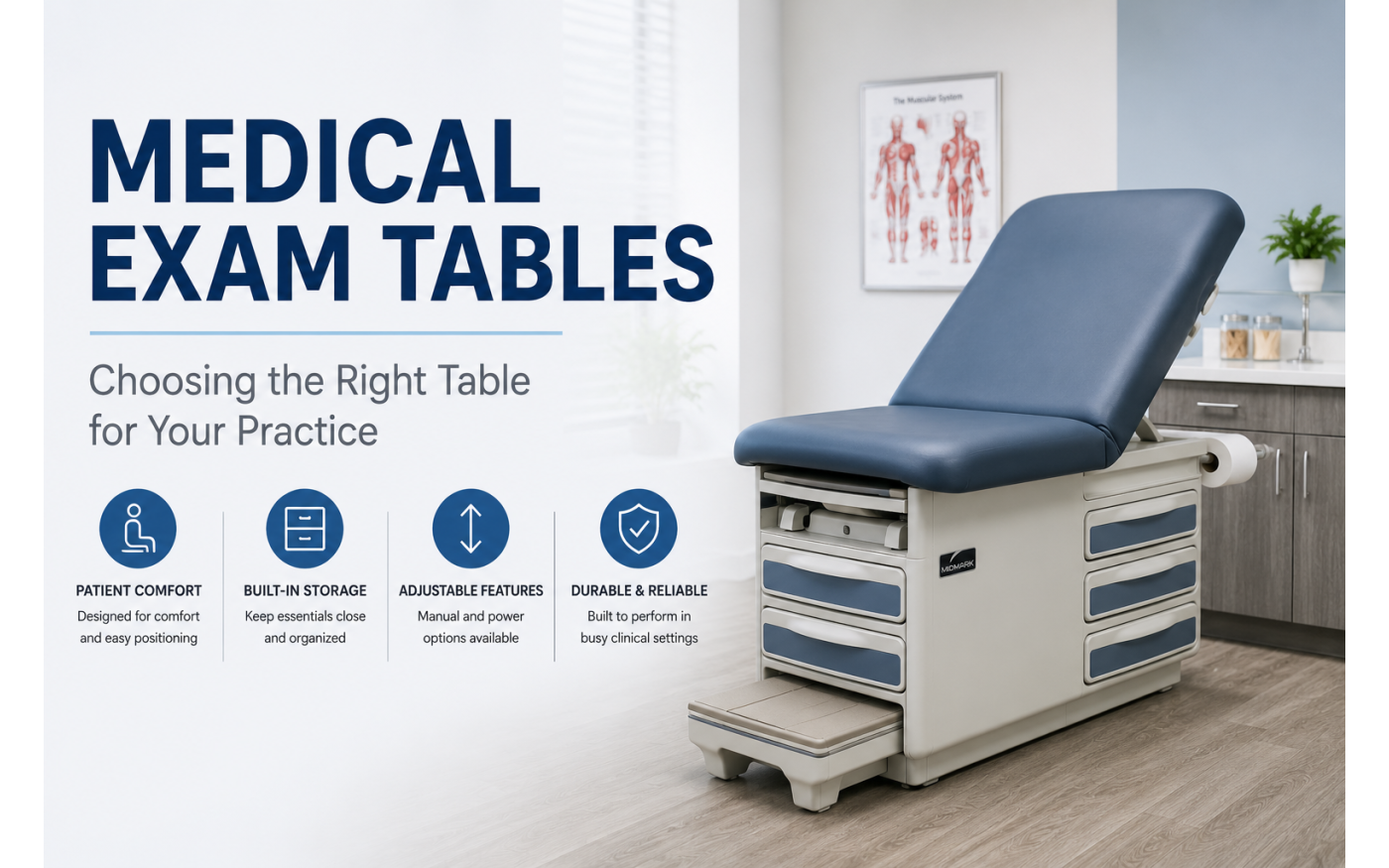
How to Choose the Right Medical Exam Table
A medical exam table is one of the most important pieces of equipment in any physician office, urgent care center, specialty clinic, or outpatient healthcare facility. The right table improves patient comfort, supports efficient clinical workflows, and provides healthcare professionals with reliable access during examinations and procedures.
Today's medical exam tables are available in a wide range of configurations, from traditional manual models to advanced power exam tables with accessibility features. Understanding the differences can help you select a table that meets your practice's needs today while providing long-term value.
If you're furnishing a new office or replacing old medical tables, taking the time to compare available options can help you make a confident purchasing decision.
What Is a Medical Exam Table?
A medical exam table is a specialized piece of healthcare furniture designed to safely position patients during routine physical examinations and minor procedures.
Most exam tables include:
-
Adjustable backrests
-
Pull-out footrests
-
Built-in storage drawers
-
Paper roll holders
-
Durable upholstered tops
-
Easy-to-clean surfaces
Depending on the model, exam tables may also offer power height adjustment, integrated accessibility features, and increased patient weight capacities. Examples of these are Clinton Exam Tables and Midmark Exam Tables.
Types of Medical Exam Tables
Manual Exam Tables
Manual exam tables remain one of the most popular choices for family practices, internal medicine, pediatrics, and many specialty clinics.
Benefits include:
-
Cost-effective
-
Durable construction
-
Simple operation
-
Minimal maintenance
-
The popular Midmark 204 Exam Table and Clinton 8890 Exam Table
For practices with standard examination needs, manual tables often provide an excellent balance of functionality and value.
Power Exam Tables
Power exam tables use electric motors to adjust table height and patient positioning.
Advantages include:
-
Improved patient accessibility
-
Easier transfers for patients with limited mobility
-
Reduced physical strain for staff
-
Enhanced ergonomics
-
Greater positioning flexibility
Power exam tables are increasingly popular in clinics focused on patient accessibility and provider efficiency.
Key Features to Consider
When comparing medical exam tables, consider the following features:
Weight Capacity
Choose a table that comfortably accommodates your patient population while providing long-term durability.
Accessibility
Practices serving elderly patients or individuals with mobility limitations may benefit from height-adjustable exam tables that improve patient access.
Storage
Integrated drawers and cabinets help organize frequently used clinical supplies while reducing clutter throughout the exam room.
Upholstery
Medical-grade upholstery should be durable, easy to disinfect, and resistant to everyday wear.
Adjustability
Depending on your specialty, adjustable backrests, stirrups, footrests, and positioning options may improve both patient comfort and examination efficiency.
Choosing the Right Exam Table for Your Specialty
Different healthcare specialties often have different requirements.
Family Medicine
General family practices often prioritize durability, storage, and ease of cleaning.
Internal Medicine
Comfortable patient positioning and dependable daily performance are important considerations.
Pediatrics
Practices may prefer compact exam tables with child-friendly features and accessible storage.
Women's Health
OB/GYN practices often require specialized positioning capabilities and integrated stirrups.
Urgent Care
High patient volume makes durability, easy cleaning, and efficient workflow especially important.
Popular Medical Exam Table Manufacturers
Several manufacturers have earned strong reputations for producing reliable medical exam tables.
Midmark
Midmark exam tables are widely recognized for their quality construction, patient comfort, and innovative features. Many physician practices choose Midmark for its dependable performance and long service life.
Clinton Industries
Clinton exam tables provide durable, practical solutions for healthcare providers seeking reliable performance and outstanding value. Their broad product line offers options for a variety of specialties and budgets.
Manual vs. Power Exam Tables
The best choice depends on your practice's workflow, patient population, and budget.
Manual exam tables generally offer:
-
Lower initial investment
-
Simple operation
-
Reliable long-term performance
Power exam tables offer:
-
Improved accessibility
-
Greater patient comfort
-
Easier staff ergonomics
-
Height adjustment at the touch of a button
Practices focused on accessibility or caring for patients with mobility limitations often find power exam tables to be a worthwhile investment.
Frequently Asked Questions
What is the difference between a manual and power exam table?
Manual exam tables use mechanical adjustments, while power exam tables use electric motors to adjust height and positioning, improving accessibility and ergonomics.
How much weight can a medical exam table support?
Weight capacities vary by manufacturer and model. Always review the manufacturer's specifications to ensure the table meets your practice's needs.
Are power exam tables ADA compliant?
Many height-adjustable exam tables are designed to improve patient accessibility. Review the manufacturer's specifications to determine whether a particular model meets your facility's accessibility requirements.
Which medical exam table is best for a family practice?
Many family practices choose durable manual exam tables that offer integrated storage, comfortable patient positioning, and dependable daily performance. Practices emphasizing accessibility may prefer a power exam table.
How long do medical exam tables typically last?
A high-quality medical exam table can provide many years of reliable service when properly maintained and used according to the manufacturer's recommendations.
Conclusion
Selecting the right medical exam table is an important investment in both patient care and practice efficiency. By comparing manual and power models, evaluating key features, and considering your patient population, you can choose equipment that supports your clinical workflow for years to come.
Whether you're outfitting a new healthcare facility or upgrading existing exam rooms, investing in a quality medical exam table can improve patient comfort, staff efficiency, and the overall experience within your practice.
Shop for Related Medical Equipment
And our complete line of Medical Equipment
Related Medical Equipment Articles
- Why ADA Compliant Medical Scales Matter: A Guide for Healthcare Facilities
-
Understanding Autoclave Testing: Why It Matters and How It's Performed
-
Autoclave Classes Explained: Class B vs. Class S vs. Gravity Sterilizers
-
Midmark 204 vs Clinton 8890 | Best Exam Table Comparison for Medical Practices
-
Outfitting a New Medical Exam Room: The Complete Equipment Checklist
-
How to Choose the Right Clinton Treatment Table for Your Medical Practice
-
Tuttnauer Autoclave Comparison Guide: Which Model Is Right for Your Practice?
- How to Clean and Maintain a Tuttnauer Autoclave: Complete Guide