Nitrile Vs. Vinyl Gloves
Whether you're stocking a physician's office, urgent care center, dental practice, wellness clinic, laboratory, or long-term care facility, choosing the right disposable medical gloves is an important purchasing decision. The two most common options are nitrile gloves and vinyl gloves, but they are designed for different applications.
While both glove types provide a protective barrier, they differ significantly in durability, chemical resistance, puncture protection, comfort, and cost. Understanding these differences can help you improve safety, reduce waste, and control supply costs.
In this guide, we'll compare nitrile and vinyl gloves so you can determine which option best fits your clinical environment.
What Are Nitrile Gloves?
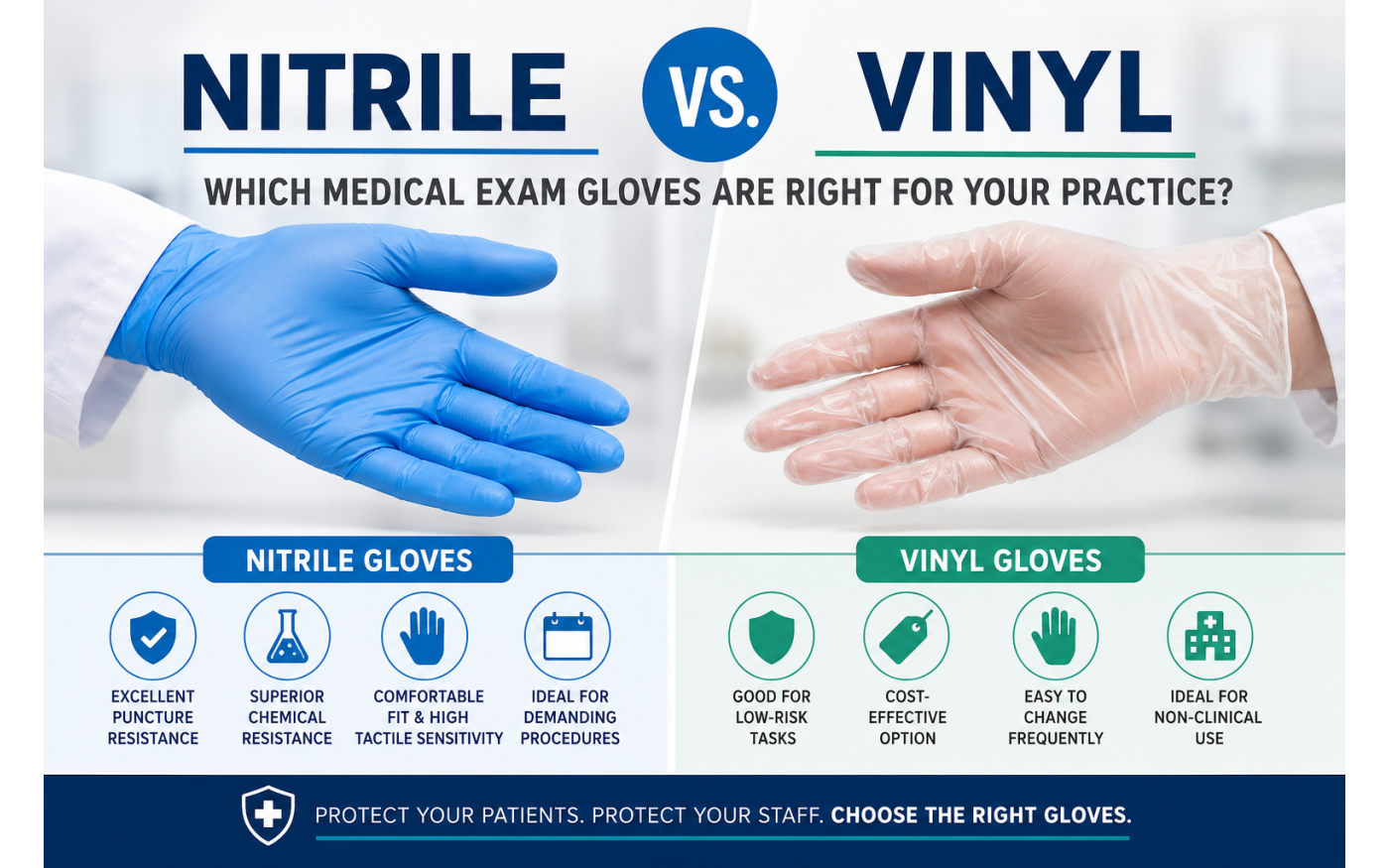
Nitrile gloves are made from synthetic rubber and have become the preferred disposable glove for most healthcare professionals. Because they contain no natural latex, they help reduce the risk of latex allergies while providing exceptional durability and puncture resistance.
Nitrile gloves offer an excellent balance of strength, flexibility, and tactile sensitivity, making them ideal for patient examinations, blood draws, IV therapy, laboratory work, wound care, and procedures involving exposure to bodily fluids.
Benefits include:
- Excellent puncture resistance
- Superior chemical resistance
- Latex free
- Comfortable fit
- High tactile sensitivity
- Suitable for extended wear
- Resistant to many disinfectants and medications
What Are Vinyl Gloves?
Vinyl gloves are manufactured from polyvinyl chloride (PVC) and are often chosen for low-risk tasks that require frequent glove changes. They are typically more economical than nitrile gloves and work well when exposure to bloodborne pathogens or hazardous chemicals is unlikely.
Vinyl gloves are commonly used for:
- Reception areas
- Food service
- Housekeeping
- Patient transport
- Non-invasive examinations
- General cleaning
Although vinyl gloves provide a protective barrier, they are generally less durable and more prone to tearing than nitrile gloves.
Nitrile vs. Vinyl Gloves: Side-by-Side Comparison
| Feature | Nitrile Gloves | Vinyl Gloves |
|---|---|---|
| Material | Synthetic Rubber | PVC |
| Latex Free | Yes | Yes |
| Puncture Resistance | Excellent | Fair |
| Chemical Resistance | Excellent | Limited |
| Durability | Excellent | Moderate |
| Fit | Contours to Hand | Looser Fit |
| Touch Sensitivity | Excellent | Good |
| Medical Procedures | Excellent | Limited |
| Cost | Higher | Lower |
When Should You Choose Nitrile Gloves?
Nitrile gloves are recommended whenever durability and protection are priorities.
Healthcare professionals commonly select nitrile gloves for:
- Physician offices
- Hospitals
- Emergency departments
- IV therapy clinics
- Wellness clinics
- Infusion centers
- Surgical centers
- Laboratories
- Blood collection
- Dental practices
- Veterinary clinics
Because nitrile gloves resist punctures and many chemicals better than vinyl gloves, they provide greater confidence during demanding clinical procedures.
When Are Vinyl Gloves a Good Choice?
Vinyl gloves remain a cost-effective solution for lower-risk environments where gloves are changed frequently and maximum durability is not required.
They are commonly used for:
- Reception desks
- Food preparation
- Environmental services
- Housekeeping
- General cleaning
- Patient check-in
- Short-duration examinations
Facilities often keep both glove types available, using nitrile for clinical care and vinyl for routine support tasks.
Are Nitrile Gloves Latex Free?
Yes. Nitrile gloves contain no natural rubber latex, making them an excellent option for facilities seeking to minimize latex allergy concerns among patients and healthcare workers.
Many organizations have transitioned almost entirely to nitrile gloves as part of their infection prevention programs.
Which Gloves Last Longer?
Nitrile gloves generally last significantly longer than vinyl gloves because they are more resistant to:
- Tears
- Punctures
- Stretching
- Chemicals
- Oils
- Alcohol-based disinfectants
While vinyl gloves may cost less initially, replacing torn gloves more frequently can increase overall usage.
Choosing the Right Disposable Gloves for Your Practice
When selecting disposable medical gloves, consider:
- Type of procedures performed
- Risk of exposure to blood or bodily fluids
- Chemical exposure
- Frequency of glove changes
- Required durability
- Staff comfort
- Budget
Many healthcare facilities stock both nitrile and vinyl gloves to balance protection and cost efficiency.
Shop Disposable Medical Gloves at Mohawk Medical Mall
Mohawk Medical Mall offers a wide selection of disposable medical gloves from trusted manufacturers, including nitrile and vinyl exam gloves designed for physician offices, hospitals, dental practices, laboratories, and wellness clinics.
Whether you're purchasing gloves for everyday patient care or routine facility operations, our team can help you find the right products at competitive prices with fast nationwide shipping.
Suggested internal links:
- Nitrile Exam Gloves
- Vinyl Exam Gloves
- Riserva Nitrile Exam Gloves
- Riserva Vinyl Exam Gloves
- Medical Office Supplies
- IV Therapy Supplies
Frequently Asked Questions about Nitrile & Vinyl Gloves
Are nitrile gloves better than vinyl gloves?
Nitrile gloves generally provide greater puncture resistance, durability, and chemical protection, making them the preferred choice for most clinical applications. Vinyl gloves are better suited for lower-risk tasks where cost savings are a priority.
Why are nitrile gloves more expensive?
Nitrile gloves are manufactured from synthetic rubber and offer higher performance, greater durability, and better protection than vinyl gloves, which contributes to their higher cost.
Are vinyl gloves safe for patient care?
Vinyl gloves may be appropriate for low-risk, non-invasive tasks. For procedures involving blood, bodily fluids, or greater exposure risks, nitrile gloves are typically recommended.
Do hospitals use vinyl gloves?
Many hospitals primarily use nitrile gloves for direct patient care but may still use vinyl gloves for housekeeping, food service, or other non-clinical tasks.
Are nitrile gloves latex free?
Yes. Nitrile gloves do not contain natural rubber latex, making them a suitable option for individuals with latex sensitivities.
Related Medical Supplies Resources
To learn more about IV therapy, explore these educational guides:
- Verruca Freeze: A Complete Guide to Professional Cryotherapy for Wart & Skin Lesion Removal
- Online Medical Supply Company for Healthcare Professionals Nationwide
- LeadCare II Blood Lead Analyzer: Complete Guide to Point-of-Care Blood Lead Testing
- Where Can I Buy Medical Supplies Online? A Guide for Healthcare Professionals